¶ What is shellac
Shellac is a film finish that is usually solved in alcohol. It can be a simple, practical finish, but can also be used to achieve high gloss french polish surfaces. Last but not least, it's a universal primer and sanding sealer.
¶ Pros
Easy to apply, easy to fix, more natural feel and look than most artifical finishes.
¶ Cons
Finish can more easily be damaged, especially from prolonged exposure to alcohol which will re-dissolve it and alkaline cleaning agents which will break the shellac down. It's also hygroscopic. It can still last a long time if treated well.
¶ Most relevant types of shellac
¶ Premixed
Already dissolved in alcohol. Can be applied right away, has a shelf live, though. Also available in spray cans.
¶ Flakes (blonde, lemon, orange, ruby, garnet)
Maybe the most commonly used or practical form since it has a long shelf live and can be dissolved to the desired consistency. There are different hues from very light to dark red.
Flakes have been already been dissolved in alcohol, contain little if any wax and result in a slightly less hard finish than other forms (see below). Refrigerating shellac will expand its shelf live, but mainly it should be kept dry and away from extreme heat.
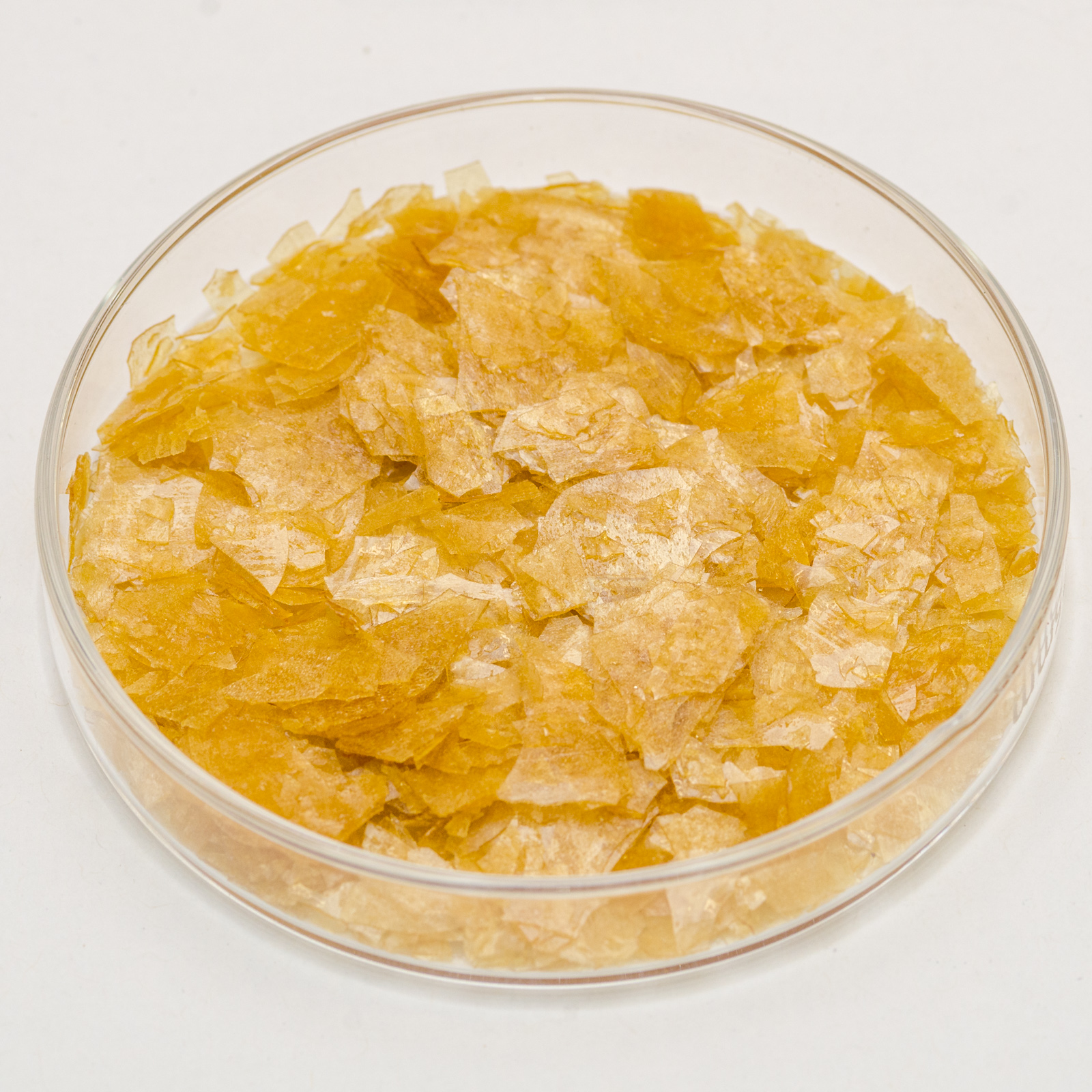
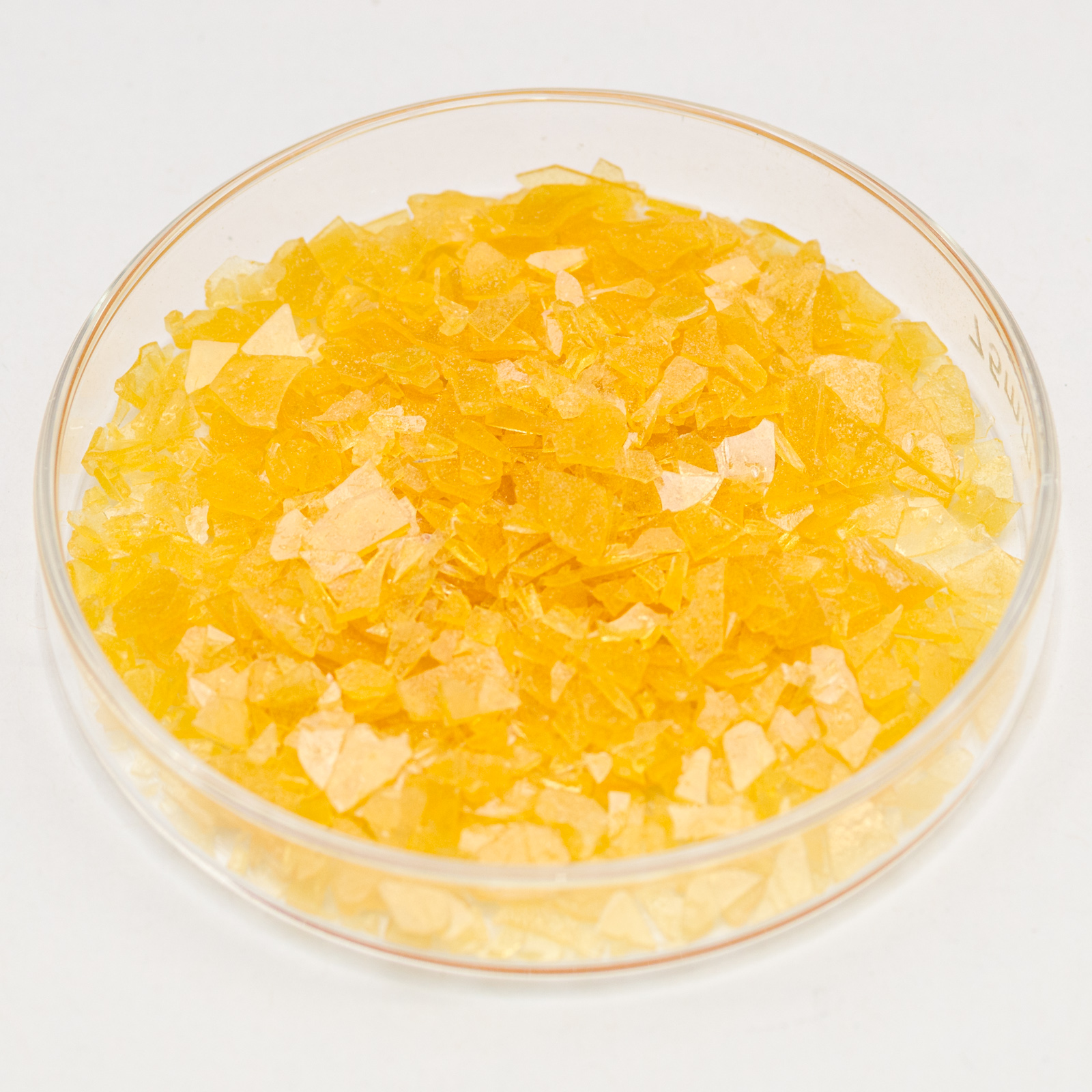
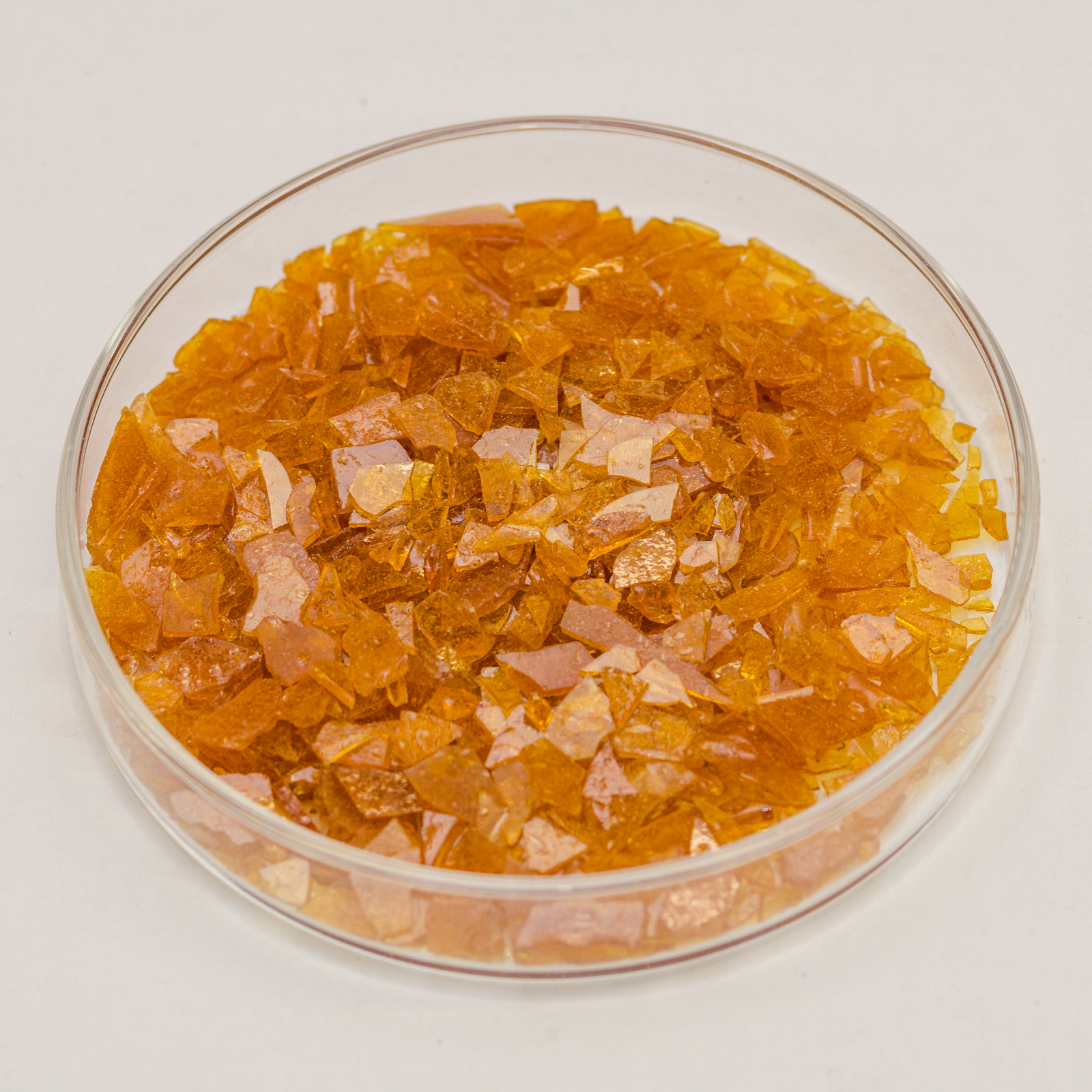
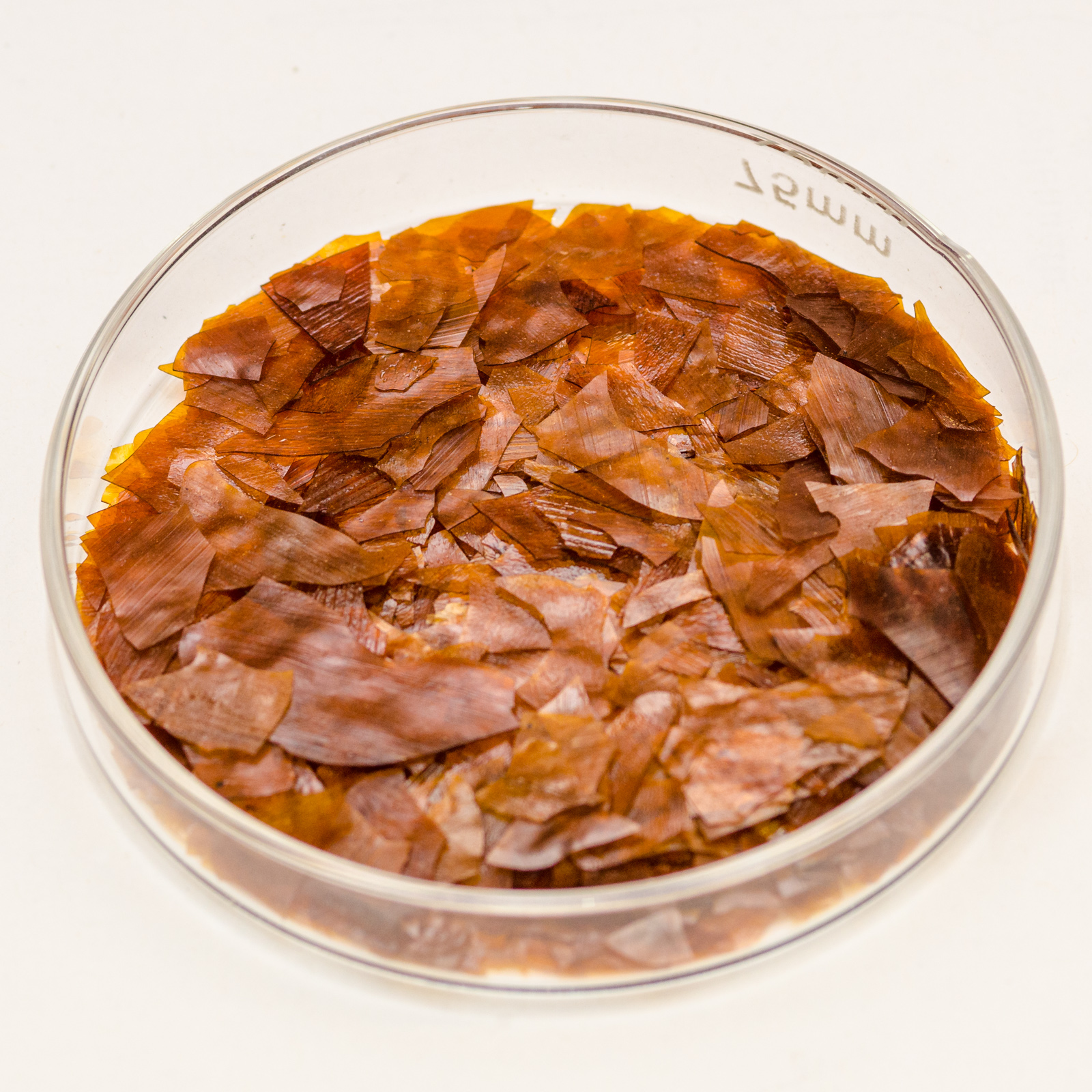
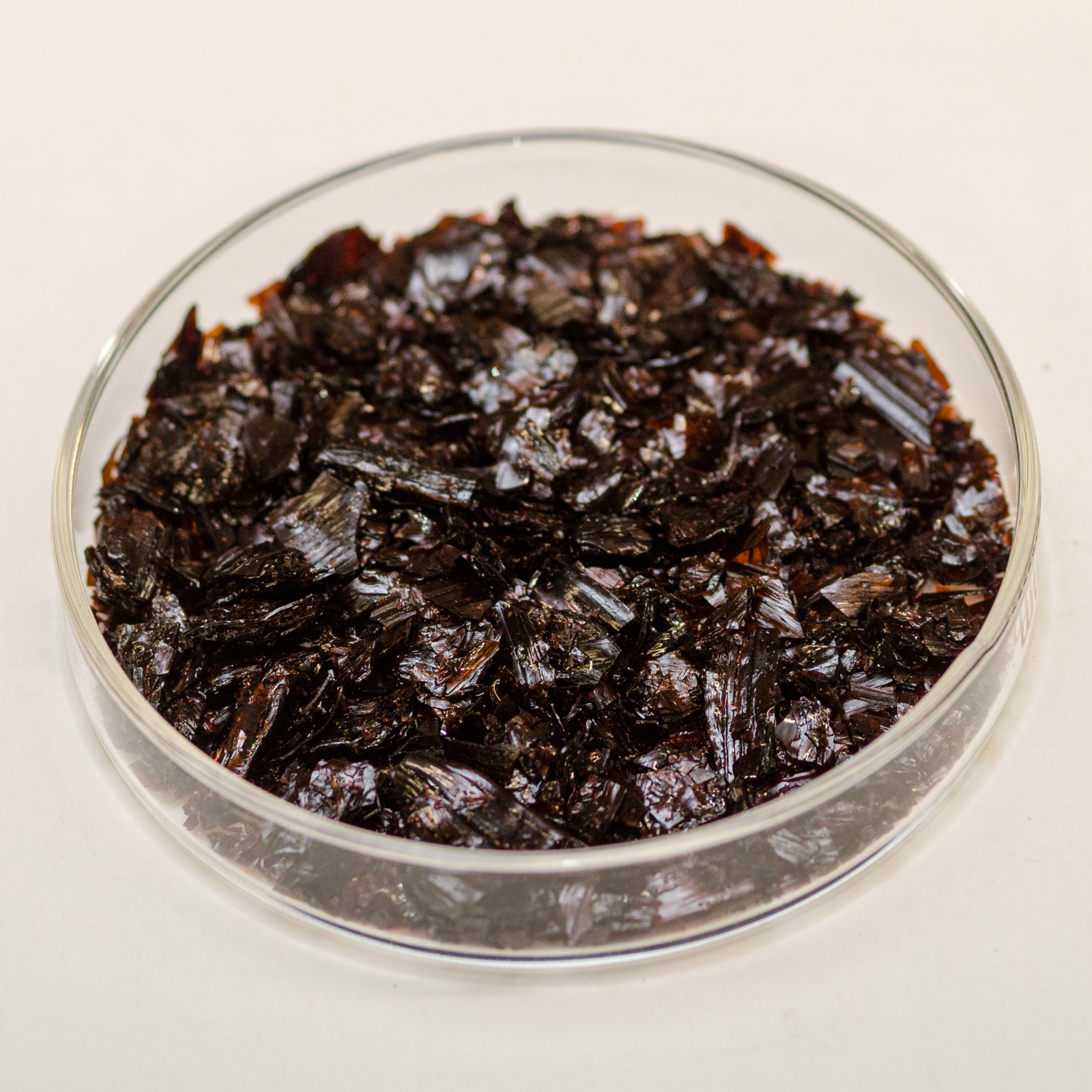
super blonde - lightest - light - lemon - garnet
¶ How to dissolve
Ideally >96% ethanol is used that doesn't contain any methanol (it's toxic!). Shellac can also be dissolved in isopropyl alcohol (IPA) but it may take a bit longer than in ethanol (which can be a benefit for French polish, as it doesn't dissolve the previous layers as readily). The flakes can be pulverized to speed up dissolving but need to be stirred or shaken repeatedly or will form a clump that takes longer to completely dissolve. Some people use stirrers with magnetic bars to agitate it for a while until dissolved.!
¶ "cuts"
A one pound cut refers to one pound of shellac dissolved in one gallon of alcohol (14g/100ml). A two pound cut would be two pounds per gallon. (also see this overview at shellac.net). Cut indicates the thickness of the solution. Starting with a higher cut is recommended, as you can then thin it according to the application.
Here is a conversion chart for metric weights: https://woodnewsonline.com/DTEW/1304apr/downtoearthwoodworker1.html
To summarize: 12g shellac to 100ml alcohol (or about 80g) is a 1-pound cut; consequently, 24g shellac instead results in a 2-pound cut and 36g a 3-pound cut.
This table gives you an idea about how various ratios compare to the common pound cut numbers.
| Shellac g | Ethanol ml | Ethanol g | ratio g/ml | ratio g/g | pound cut |
|---|---|---|---|---|---|
| 12 | 100 | 80 | 0.12 | 1 | |
| 12 | 125 | 100 | 0.10 | ||
| 24 | 100 | 80 | 0.24 | 2 | |
| 24 | 125 | 100 | 0.20 | ||
| 36 | 100 | 80 | 0.36 | 3 | |
| 36 | 125 | 100 | 0.29 | ||
| 50 | 156 | 125 | 0.32 | 1:2.5 | |
| 50 | 209 | 167 | 0.24 | 2 | |
| 25 | 187,5 | 150 | 0.13 | 1:6 | close to 1 |
| 50 | 187,5 | 150 | 0.27 | 1:3 | |
| 75 | 187,5 | 150 | 0.4 | 1:2 | |
| 45 | 125 | 100 | 0.36 | 3 |
However, it's hardly critical to aim for a specific cut. It seems best to start with a higher cut and thin as the application requires. If you're using a scale, a ratio of 2:5 g Shellac to g Ethanol seems a reasonable starting point (not quite a 3 pound cut).
¶ How to store
Many sealable containers can be used to store shellac. Jars are fine, but the lid can freeze tight if the shellac at the rim dries. It normally can be worked open since the lid is usually malleable to some extend. It can help to rinse the lid with a bit of alcohol or clean up the lid with the brush or a paper towel.
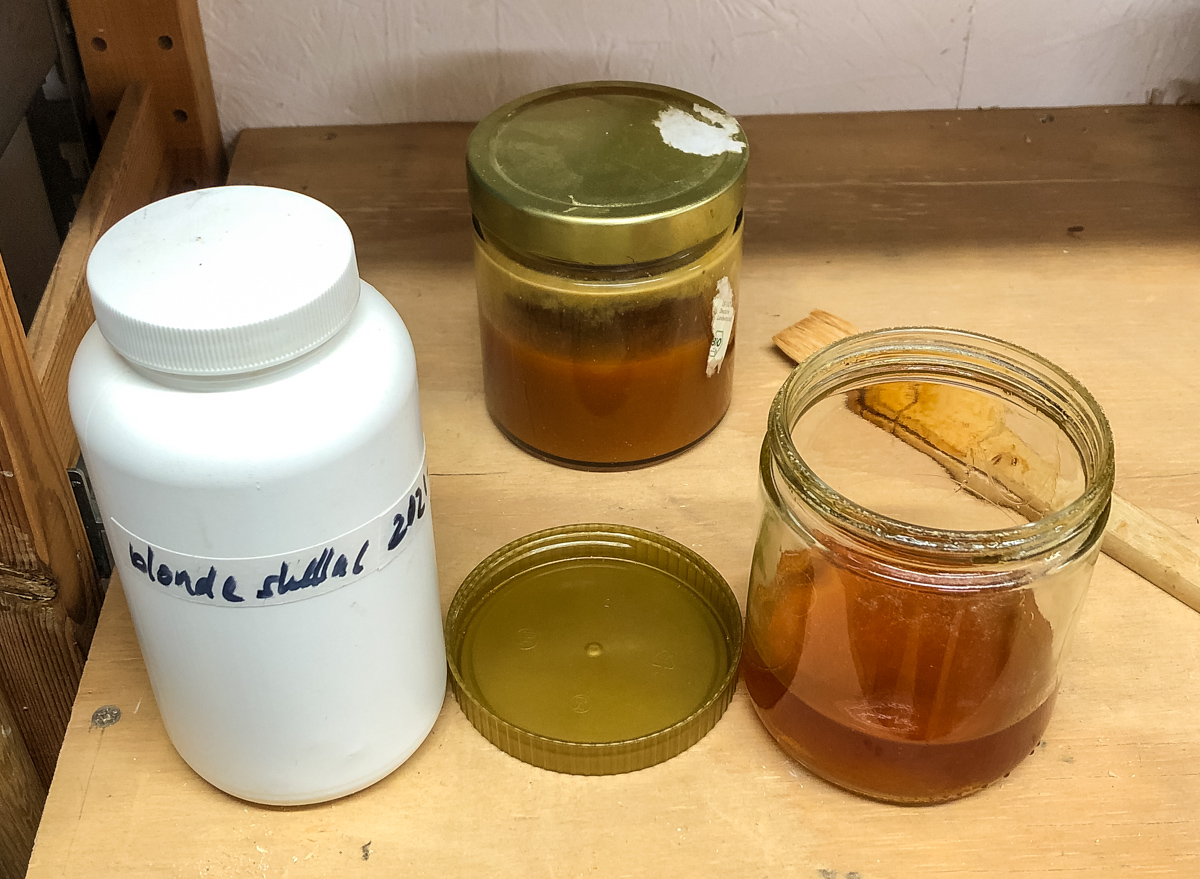
It might be beneficial to keep the cut higher for longer term storage (thinning it down will reduce the relative amount of water in the solution, if it has obsorbed any) and without too much superfluous air (= less water to absorb). That's just a theory, but neither precaution will do any harm.
¶ How to apply
Depending on the use case:
¶ Brush
One way to go about using a brush to apply shellac is as follows:
- The surface can be lightly sanded with 250-400 grit.
- Apply a coat of shellac. Try to work in a continous manner from one side to the other of a surface without going back to any part that has started to dry
- Wait for 10 Minutes to a few hours for it to dry.
- Very lightly sand the previous coat with 250-400 sandpaper to remove raised grain and dust.
- Repeat 2-4 until the desired coating is achieved, 3 coats can be sufficient.
- Option 1: polish with a brown paper bag
- Option 2: apply a coat of paste wax with 0000 steel wool
- Option 3: reduce sheen with 0000 steel wool
Hake brushes made from goat hair work very well.
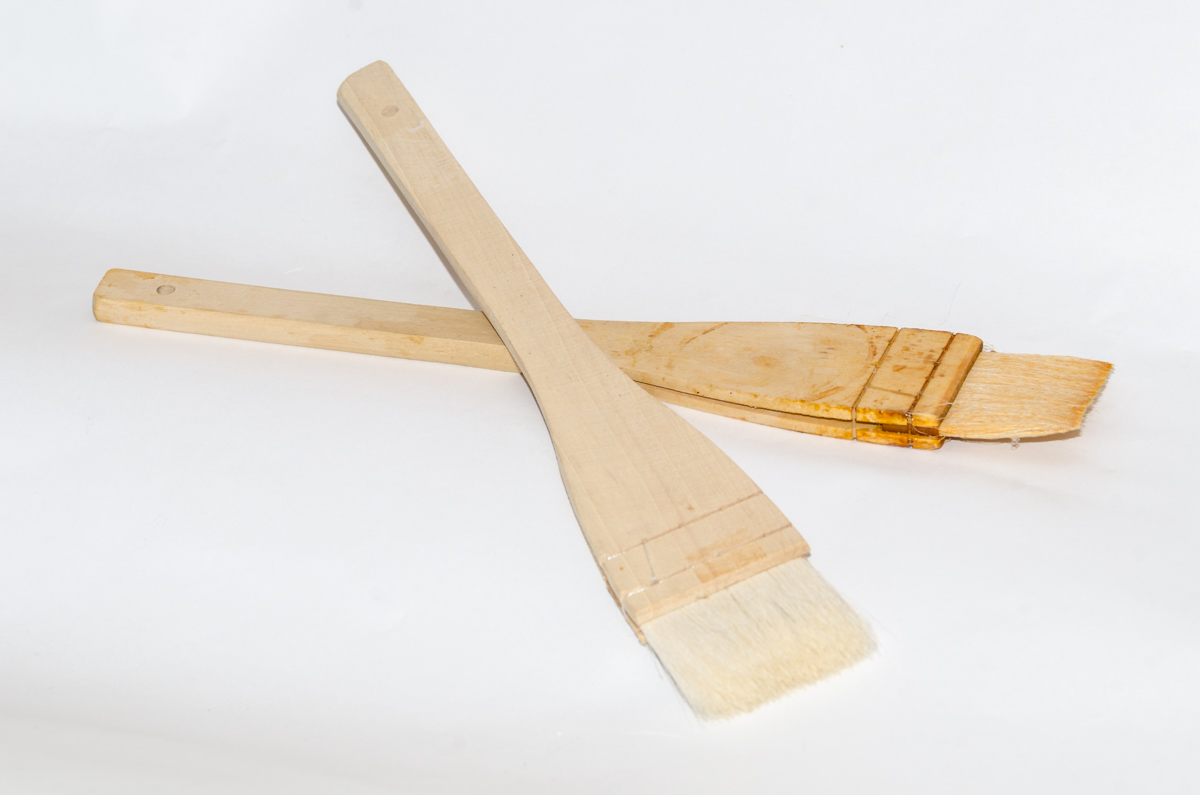
The thicker the cut, the harder it is to prevent runs. Better use thinned down shellac and apply a few more coats.
¶ Pad (French Polish)
¶ Spray Cans
You can buy Shellac in a spray can for easy application.
¶ Spray Guns
¶ Cleaning applicators
Any alcohol evaporates quickly and won't spontaneously combust. Keep it away from potential ignition sources, though.
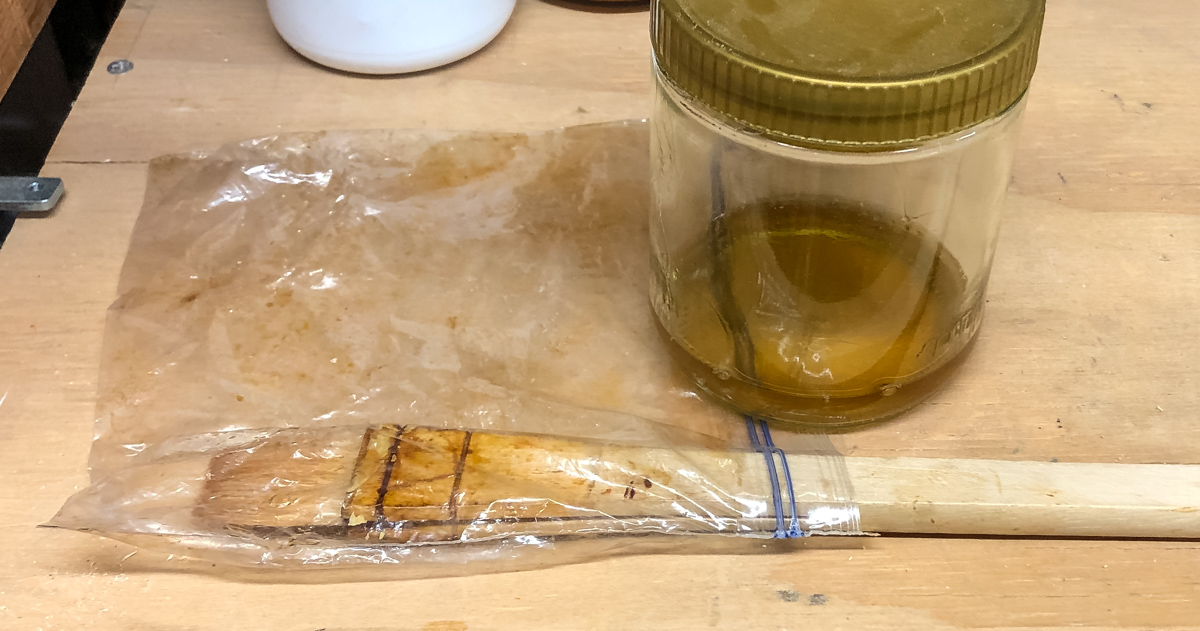
Brushes can just be left to dry. Some people drain off excess shellac with a shop towel and apply some alcohol to remove a bit more shellac, so the bristles soften quicker next time, but the brush will be ready to use after putting it into shellac after about 10 minutes regardless. Brushes can last for years if cared for well. For temporary storage between coats, a plastic bag prevents the brush from drying for at least 24h
Pads can be stored in an airtight container for repeated use. Replace outer layer if worn.
¶ Waxed vs. Dewaxed
Some of the lighter colored shellacs are dewaxed which makes them suitable as a primer or barrier coat. Putting a different finish over waxed shellac can be problematic. Waxed shellac can have a longer shelf live, though and you can dewax shellac by letting the wax settle at the bottom and decant it.
¶ Button lac
Shellac is heated and filtered through cloth to form flat button droplets. It contains up to 5% wax and results in a more scratch resistant finish, e.g. good for flooring. It has an orange tint to it compared to blonde shellac.

- 🎬 https://www.youtube.com/watch?v=uIb6ZvHh4bU - how button shellac is made
- 🎬 https://www.youtube.com/watch?v=Eo3eDGpjm30 - longer video on how it's made
¶ Shellac as a filler
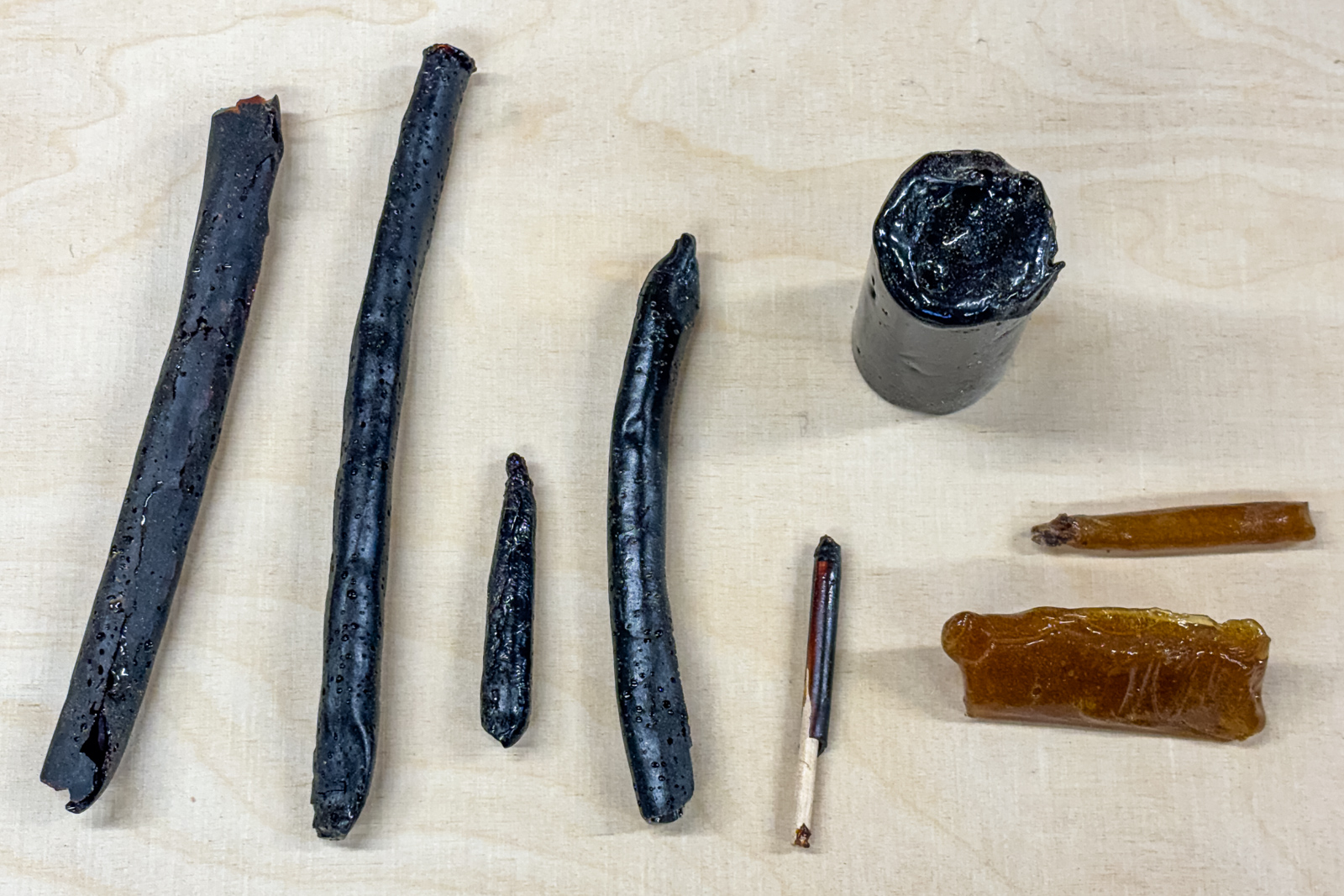
Shellac, gently heated, becomes liquid like honey and can be used to fill defects in wood surfaces. There are colored sticks available to match the surrounding wood and finish.
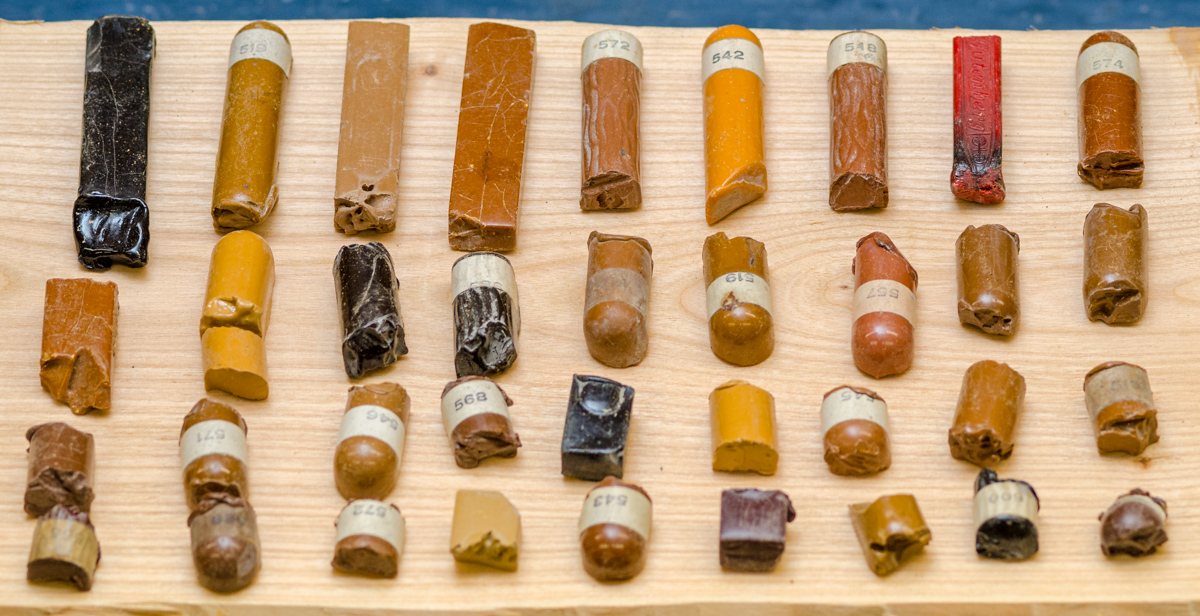
You can also make your own sticks from flakes.
¶ Where does it come from
It's a resin secreted by a lac bug that is processed, cleaned and dewaxed, but usually not further modified or augmented with other ingredients.
- 🎬 https://www.youtube.com/watch?v=6Ugo1BgOJrk&list=PLZy_yosa6uXSn60PsV9H0z2i1uHWryqnX - some general videos on the shellac production process
¶ Other forms
which are not of significant relevance to the common woodworker
- seedlac: less refined(?) crushed raw shellac
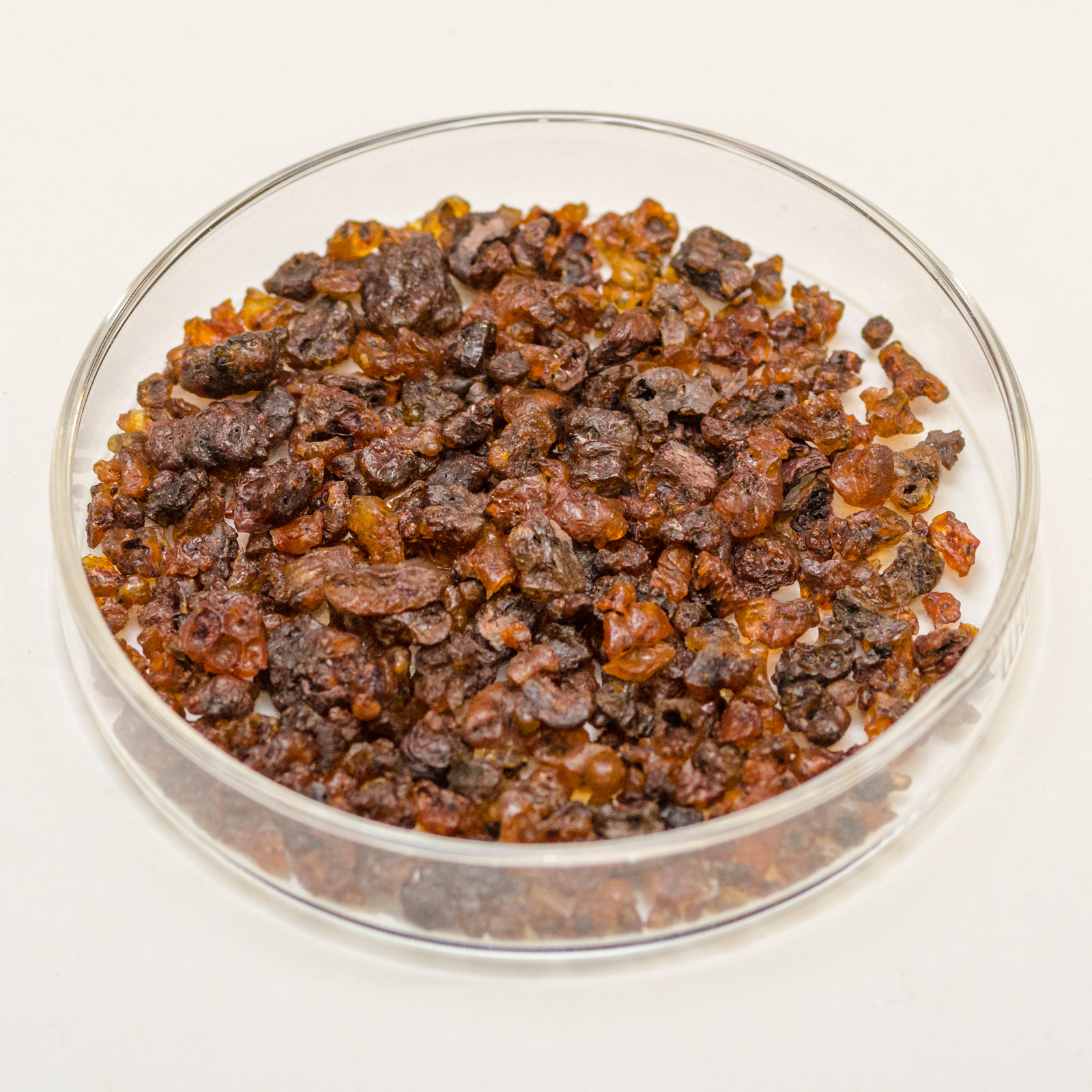
- stick lac: straight off the tree, unrefined
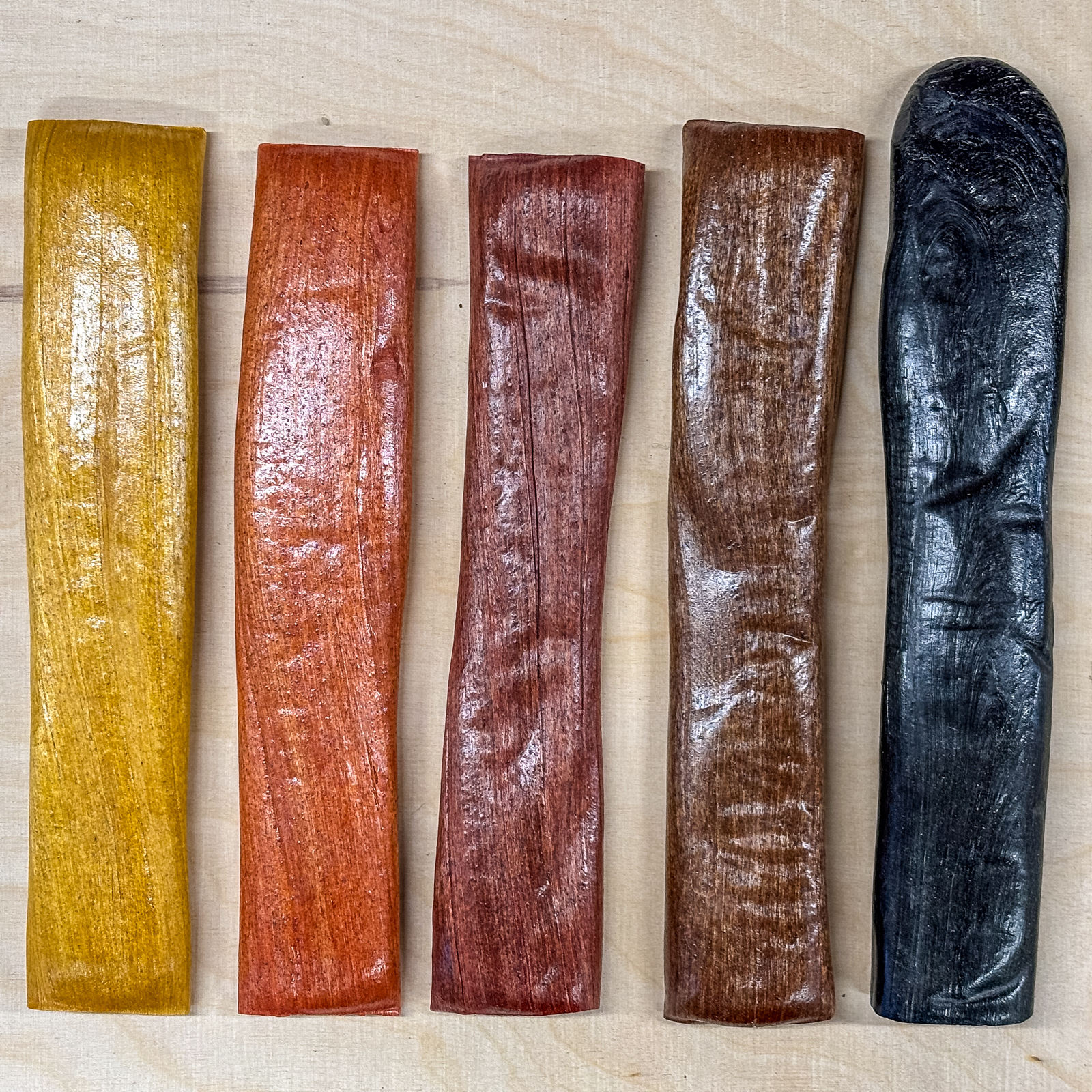
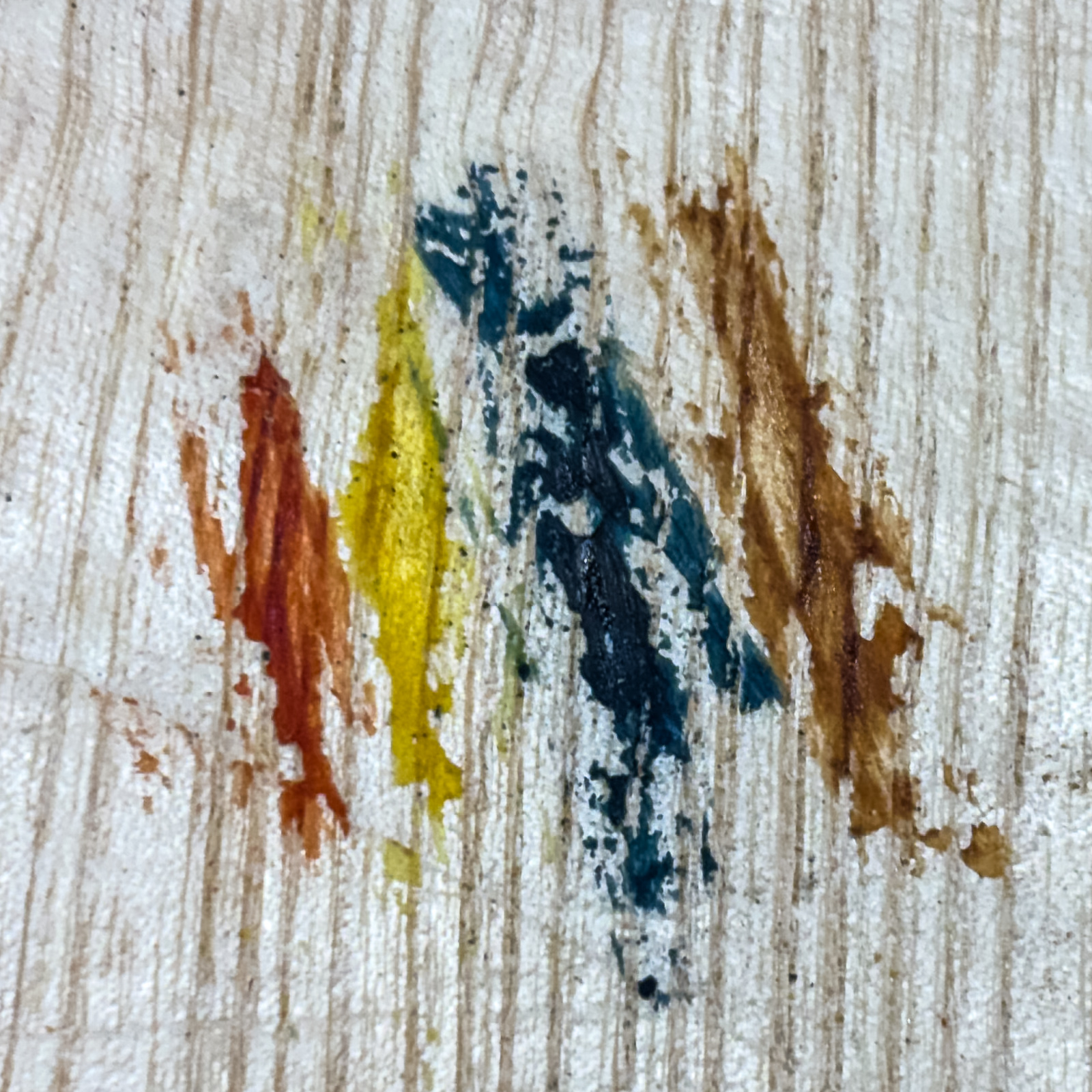
- lac sticks: molten and shaped in homogenous sticks, come in different colors
- https://www.youtube.com/watch?v=nznexGoJ94I - how colored lac sticks are made
- https://www.youtube.com/watch?v=76C3-VDYrGQ - how toys are made and finished with lac sticks
¶ Other uses
- glue, used to glue saxophone pad cups to the keys or watchmaker's / machinist's parts
- video showing how to dissolve shellac in alcohol for a glue like consistency: https://www.youtube.com/watch?v=jwOW8WYTjkE
- you can also melt it into sticks and heat those up with a heat gun or other heat source
- food additive for coating candies or fruits
- soap made from shellac with borax (cf. https://www.kremer-pigmente.com/elements/resources/products/files/60400-60500.pdf)
¶ Where to buy?
- 🇺🇸 https://www.shellac.net/
- 🇺🇸 https://toolsforworkingwood.com/store/item/MS-TF.XX
- 🇺🇸 https://www.woodcraft.com/products/brooklyn-tool-and-craft-dewaxed-shellac-flakes-1-2-lb
- 🇪🇺 https://www.kremer-pigmente.com/en/ ; some is available at https://dictum.com and https://fine-tools.com, but also check some of the sites listed here.
¶ Resources
- a good introductory article on shellac that is a bit more detailled than this wiki article: https://homesteadfinishingproducts.com/shellac-a-traditional-finish-still-yields-superb-results/
- a few words on sanding sealer, what it can be and what it's used for: https://www.rockler.com/learn/when-to-use-sanding-sealer
- 🎬 https://www.youtube.com/watch?v=UssYj-98oCg - Paul Sellers video on finishing with shellac